
Last updated November 25, 2026
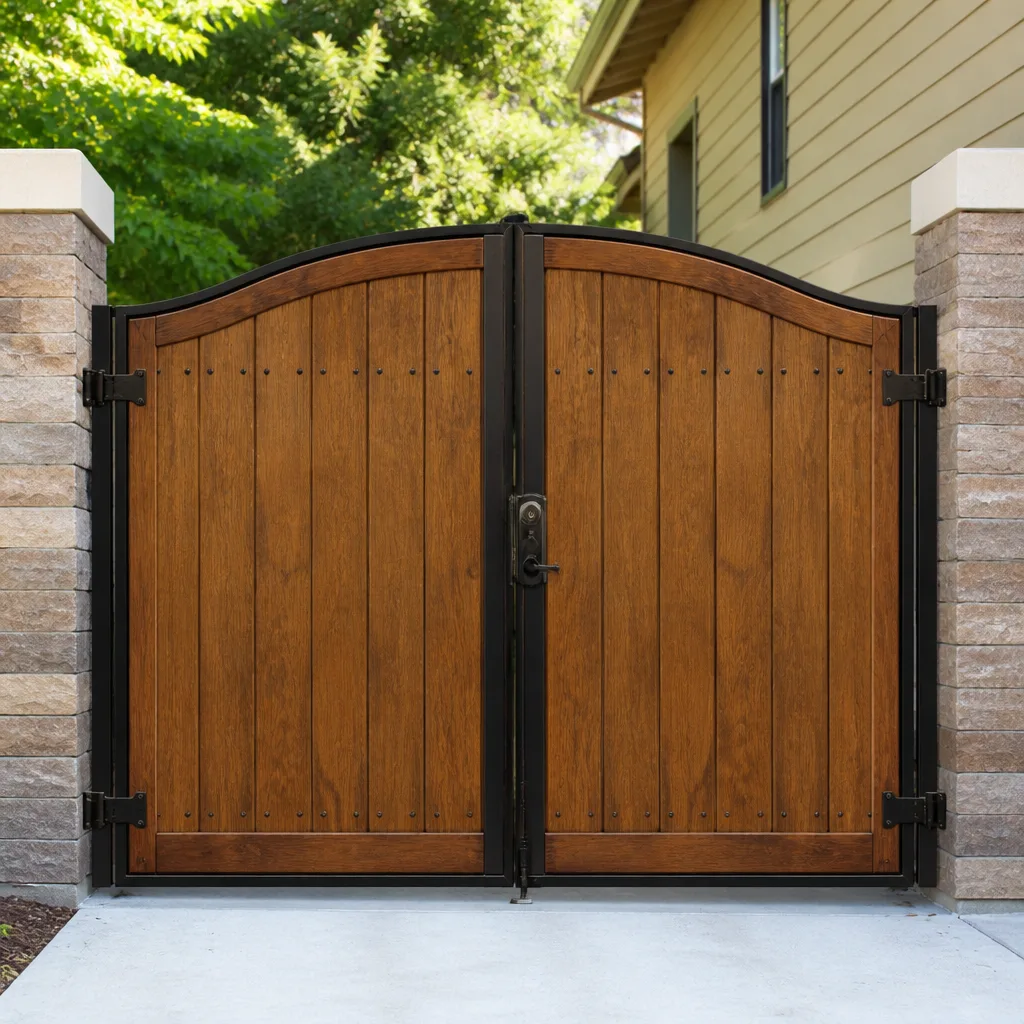 Wood & steel frame
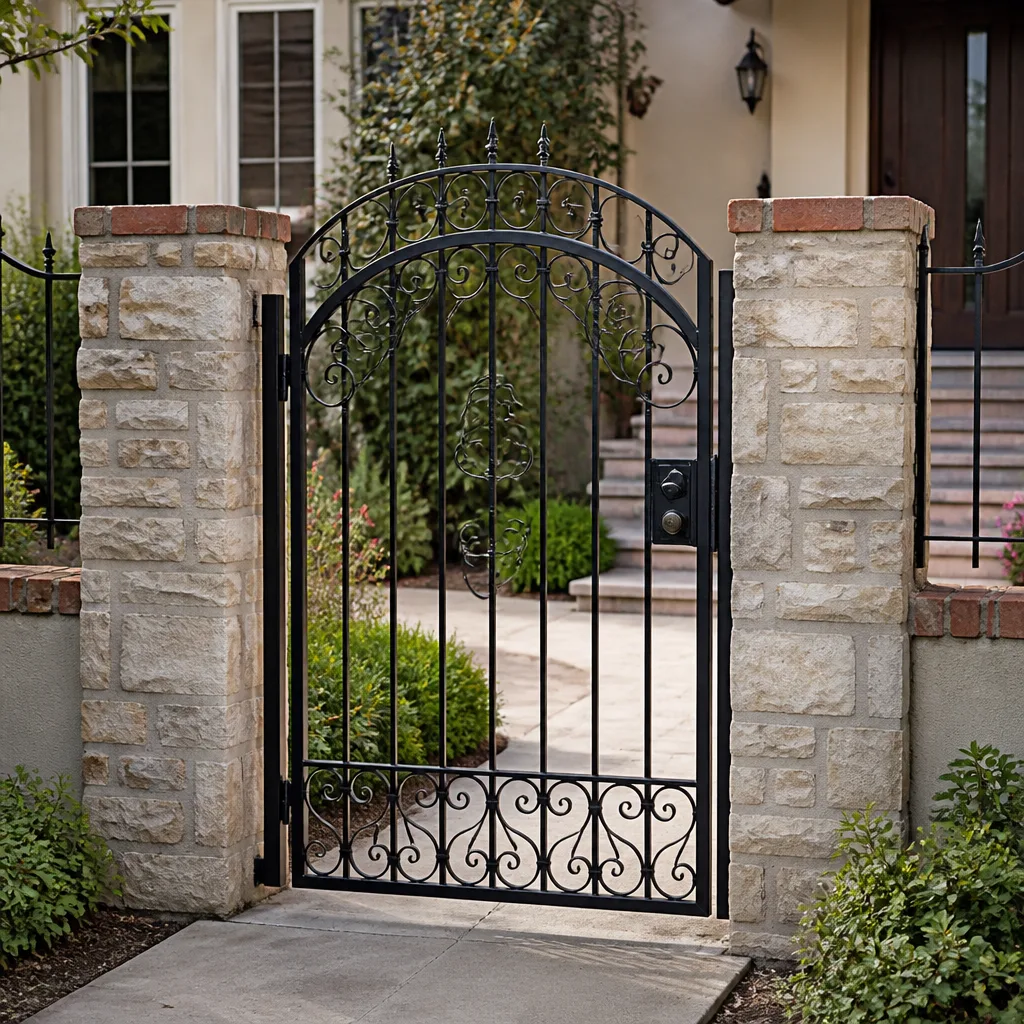 Wrought iron
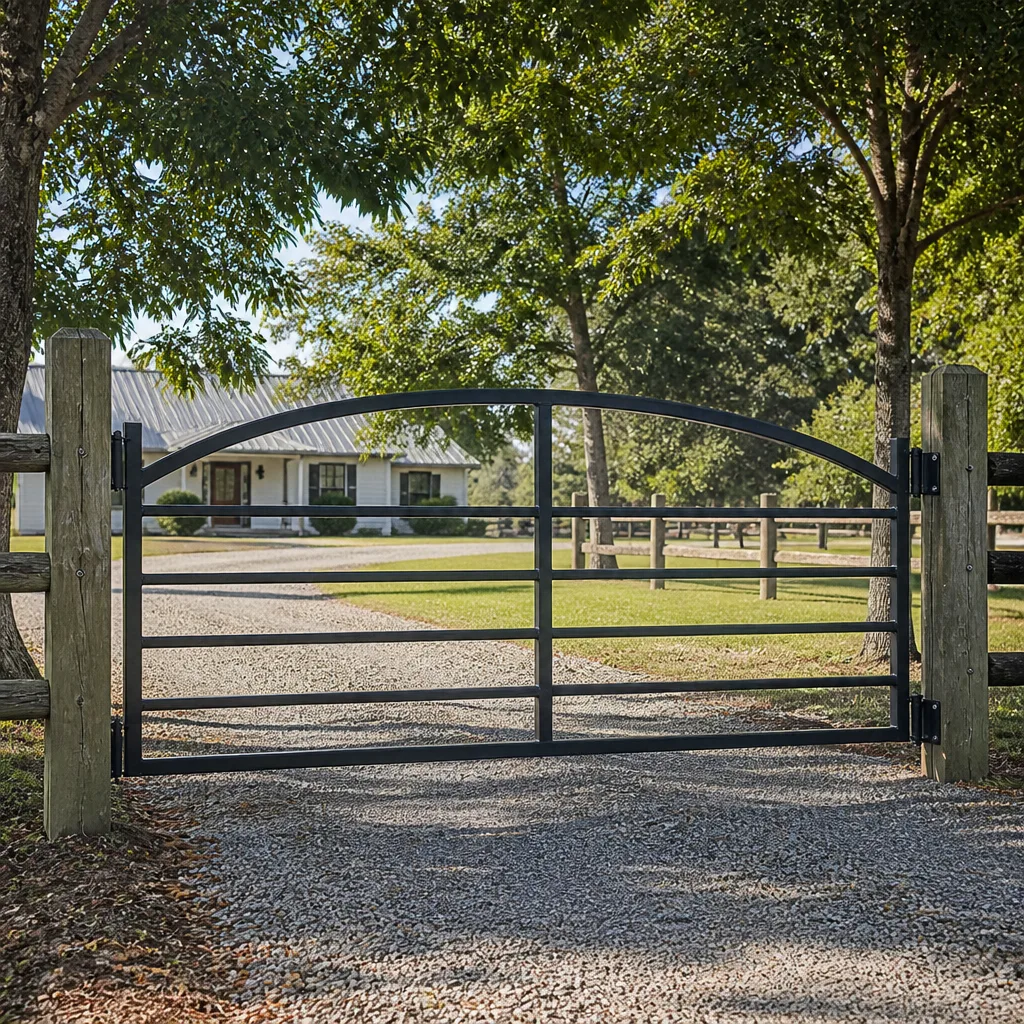 Farm & ranch
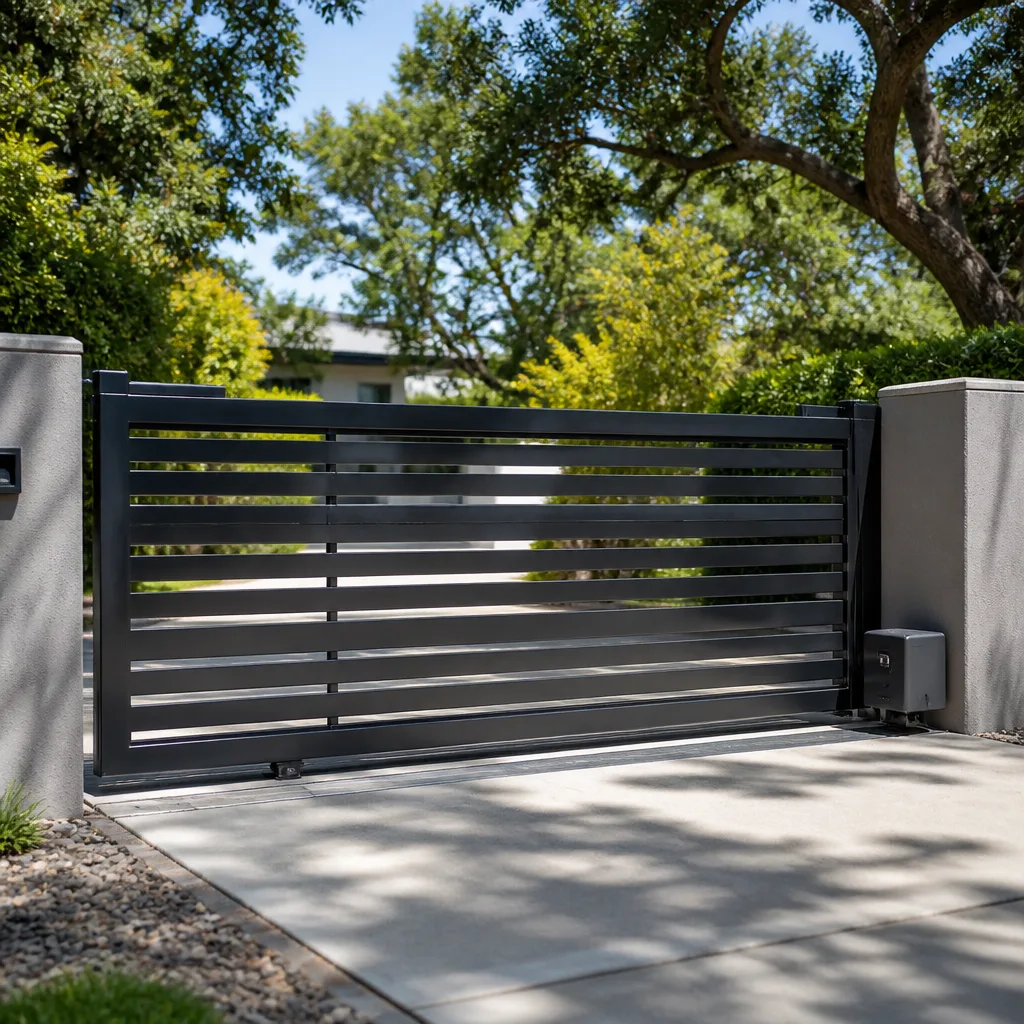 Sliding driveway gates
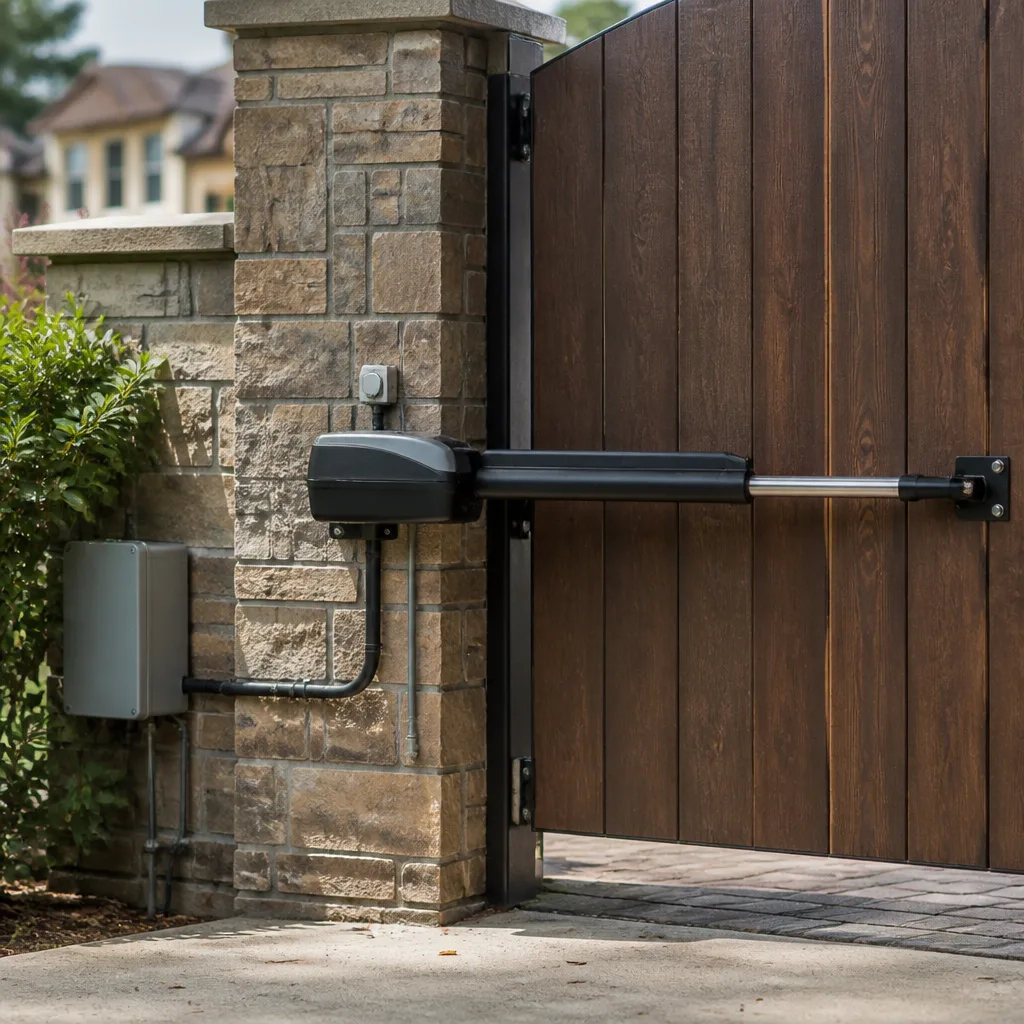 LiftMaster operators
Free on-site gate assessment - hinges, posts, and your LiftMaster or Nice gate operator checked before anything is quoted
The assessment is free and the quote is the invoice.
Get your free estimateThe Complete Guide to Gate Repair in Sellwood
A sagging gate almost never starts at the hinge. In Sellwood’s clay-heavy soil, a gate that drags on the ground is usually telling you the post has moved, and replacing hinge hardware three times won’t correct a post that has tilted. That single misunderstanding explains a large share of the repeat gate repair we see around Sellwood, where old lots, mature trees, and soil that swells and shrinks with the seasons push and pull posts out of plumb. This guide maps every common gate failure to its real cause – mechanical, structural, or electrical – so you can tell the difference between a repair that solves the problem and one that only masks it.
Quick Answer
Gate repair in Sellwood almost always comes down to one of three root causes: post movement in expansive clay soil, moisture-driven wear on hinges and operators from Pacific Northwest rain cycling, or consumer-grade hardware installed by a fence company that doesn’t hold up. A structural problem like a leaning post needs the post corrected, not the hinges. An electrical or operator failure needs a brand-specific diagnosis. Fixing the symptom without addressing the cause is why gates get repaired repeatedly and still fail.
Styles & brands we work with
- Wrought iron
- Wood & steel frame
- Farm & ranch
- Sliding driveway gates
- LiftMaster operators
Table of Contents
- The Three Root Causes of Gate Problems in Sellwood
- Why Sellwood’s Expansive Clay Soil Makes Posts Lean
- The Gate Failure Taxonomy: Mechanical, Structural, Electrical
- Why Generalist Installers Cause Repeat Repairs
- Brand Notes: What Fails on Common Sellwood Systems
- Repair or Replace: An Honest Decision Tree
- What a Real Diagnostic Visit Looks Like
- Keeping Your Gate Working Between Repairs
The Three Root Causes of Gate Problems in Sellwood
Nearly every gate problem we diagnose in Sellwood traces back to one of three sources. When you learn to recognize them, your gate stops being a mystery and becomes a predictable piece of equipment.
1. Foundation settling and soil movement. Houses in Sellwood sit on lots that were laid out long before modern grading practices. The clay soil beneath them expands when wet and contracts as it dries, and that seasonal movement works on gate posts the same way it works on old foundations. A post that was set well ten years ago can tilt a fraction of an inch per season, and over time that fraction becomes a gate that drags, binds, or won’t latch.
2. Pacific Northwest moisture cycling. Sellwood’s wet winters and dry summers cycle your gate’s moving parts between soaked and parched. Hinges rust from the inside out, wood posts swell and crack, and steel hardware loosens as moisture works into joints. This isn’t a failure of quality – it’s normal seasonal wear that a gate in a drier climate wouldn’t see.
3. Mismatched hardware from generalist installers. A fence company that also hangs gates will frequently pair a consumer-grade operator with a gate and posts meant for manual use. The hardware works for a while, then fails in a way that professional-grade components wouldn’t. We specialize exclusively in gates, and mismatched hardware is one of the most common findings on our diagnostic visits.
Understanding which of these three is driving your gate’s behavior changes everything about the repair. A structural repair on a mechanical problem wastes money. A mechanical repair on a structural problem never holds. The sections below break each one down.
Why Sellwood’s Expansive Clay Soil Makes Posts Lean
Sellwood sits on clay soils that hold water and expand when saturated, then contract as they dry through the summer. That movement is the single biggest structural factor in gate failure across the neighborhood, and it’s why a post problem looks so much like a hinge problem.
When a gate sags, the natural assumption is that the hinge has worn out. So the hinge gets replaced, the gate lifts back up for a few weeks, and then it starts dragging again. The reason is simple: the hinge was doing its job, but it was mounted to a post that had already tilted. The new hinge just reattached a gate to a bad foundation.
What actually addresses a leaning post
Correcting post movement means addressing the footing, not the hardware bolted to it. Depending on the gate and the conditions, that can mean resetting a post on a deeper, wider footing, replacing a post that has cracked, or stiffening a post with additional support so the gate frame stays true. What it never means is cranking the hinges tighter and hoping the gate stays put.
Signs the post is the real problem
- The gate drags or binds on the ground or at the latch, but the hinges look intact
- One side of the gate frame sits lower than the other, even when the gate is closed
- The gate swings on its own toward one direction, suggesting the post is out of plumb
- Cracks or gaps appear around the base of the post, where the soil pulls away
- Seasonal changes: the gate sticks worse after heavy rain or after a dry stretch
If you recognize any of these in your Sellwood gate, the repair should start with the post. Every technician we work with is trained to check post plumb before touching hardware, because getting the diagnosis right at the start is what stops the repeat-repair cycle. From the hinge to the keypad, one team handles it all, and that team starts with the foundation.
The Gate Failure Taxonomy: Mechanical, Structural, Electrical
Gate problems break down into three categories. Knowing which one you’re facing tells you what kind of specialist your gate needs, and what kind of repair is honest.
Mechanical failures
These are the moving-parts problems: hinges, rollers, latches, catches, and the hardware that keeps a gate swinging and closing correctly. Mechanical failures are usually the most straightforward to repair, and they’re the ones generalists actually attempt. The catch is that mechanical failure is often a symptom of structural or electrical problems rather than the cause.
Structural failures
These involve the post, the frame, or the footing – the parts that hold the gate in position. Structural failures are the ones a hinge replacement will never fix, and they’re the most common reason a gate “keeps coming back.” In Sellwood, structural problems are frequently soil-related, which is why a technician who understands local ground conditions saves you from hiring out for the same repair twice.
Electrical failures
For gates with operators, access control, or automation, electrical failures show up as a gate that won’t open, opens partway, reverses at random, or responds to the wrong command. The components involved – the motor, control board, sensors, keypad, intercom, and loop detectors – are brand- and model-specific. A LiftMaster operator fails differently than an FAAC or an Elite keypad system, and diagnosing them takes more than a generalist can offer. This is where our multi-brand coverage matters most: if your gate runs on LiftMaster, FAAC, Elite, Mighty Mule, or any of the brands we service, the technician arrives knowing the failure patterns for your system.
When you’re diagnosing a gate yourself, ask three questions in order: does the gate move freely when the operator is off (mechanical or structural), does the post sit plumb (structural), and does the operator respond correctly when the mechanics are sound (electrical). That order of questioning mirrors how a professional visit proceeds.
Why Generalist Installers Cause Repeat Repairs
One of the most predictable patterns we find on Sellwood gates installed by fence companies is a mismatch between the gate’s structural capacity and the operator that was hung on it. A company whose main business is fences will often choose an operator that’s simple to install rather than one built for the load and cycle count the gate actually sees.
Consumer-grade control boards are the usual culprit. They’re designed for lighter, simpler gates, and they frequently use proprietary parts and connectors that don’t accept professional-grade components. When a gear or a board fails, the repair means waiting on a consumer part that may not be available for long, or replacing the whole operator because the board can’t be upgraded in place. That’s a repair that costs more than it should, and it’s entirely avoidable when the original installation used professional-grade hardware.
The tell is usually in the access control layer. A gate that was professionally specified will have a control setup that can handle a real keypad, intercom, or loop detector. A gate that was installed as an add-on to a fencing job often can’t accept those without a full control replacement.
What to ask about your operator
- Is the operator rated for the gate’s weight and cycle count, or was it chosen for simplicity?
- Does the control board accept professional-grade accessories and replacement parts?
- Is the power run and wiring appropriate for the gate’s location and duty level?
- Are the safety edges and loop detectors compatible with the operator’s control board?
If any of these is uncertain, a diagnostic visit is the way to get a straight answer. We don’t sell you hardware you don’t need. We diagnose what you have and tell you honestly whether it can be repaired or should be replaced.
Brand Notes: What Fails on Common Sellwood Systems
Our technicians are certified to service nine major gate automation brands, from Mighty Mule and Ghost Controls at the residential end to FAAC, BFT, and DoorKing on the commercial side. Across Sellwood’s mix of old residential lots and small multi-unit buildings, a few brands come up again and again. Here’s how each tends to fail.
LiftMaster. LiftMaster operators are common on residential driveway gates around Sellwood, and when they fail, the control board or the limit settings are usually the first suspects. A gate that opens and then reverses, or stops partway, is often a limit problem rather than a motor problem, and that’s a repair that can save the operator rather than replace it.
FAAC. FAAC systems are popular on heavier residential and light commercial gates, and their weak points are usually in the gear and the hydraulic components under heavy use. A FAAC that labors, leaks, or drifts back after closing is showing a predictable wear pattern that our technicians recognize immediately.
Ghost Controls. Ghost Controls is a residential-friendly system that’s often installed by homeowners or fence crews, and the misconfiguration pattern is the common story. It’s a solid operator when set up correctly; problems usually trace to improper limits, wiring, or a consumer-grade accessory that doesn’t belong on the gate.
Elite. Elite systems sit on the access-control and commercial side, and their failures tend to involve the keypad, intercom, or loop detection layer rather than the motor itself. That’s specialist territory, and it’s exactly the kind of repair a fence or garage-door company will hand off elsewhere. We don’t hand it off.
If your gate runs on any of the brands we service, the technician who arrives already knows the failure modes for your model. That’s the core of our specialization, and it’s why a Sellwood property manager with a multi-tenant system can call the same team that handles a single residential driveway gate.
Repair or Replace: An Honest Decision Tree
One of the questions we hear most is whether a gate is worth repairing or should be replaced. The honest answer depends on which failure category you’re in, how much of the gate’s metal or wood is sound, and whether the operator and control system can support a proper fix. Here’s the decision tree we use in practice.
- Is the post sound and plumb? If yes, move to the next step. If no, the repair should start at the post. Fixing the post first tells you whether the gate itself is worth keeping.
- Is the frame or leaf intact? Rusted-through frames, rot, or serious impact damage push toward replacement. Surface wear and minor bends usually don’t.
- Is the operator repairable? If it’s a professional-grade system with available parts, repair frequently makes sense. If it’s a consumer-grade operator with a proprietary board and no upgrade path, replacement of the operator – not the gate – is usually the right call.
- Is the wiring and access control sound? Good wiring and a control setup that accepts professional accessories makes repair straightforward. Old or mismatched wiring can raise the cost of a repair above its value.
- Is the gate matched to the hardware? If the gate is heavier or busier than its operator was built for, the honest answer is often to correct the mismatch on the operator side rather than to keep repairing the wear it causes.
Running through this list in order saves you from the trap of replacing hardware on a gate that only needs a footing corrected, and from sinking money into an operator that was never going to hold up. When replacement is the honest answer, we’ll tell you. When it isn’t, we’ll repair what you have.
If your gate is part of a larger project – a new gate, an electric conversion, or an access-control upgrade – our gate installation service covers the full scope, and our gate motor & opener work is handled by the same specialist team.
What a Real Diagnostic Visit Looks Like
When you call Gate Repair Sellwood for a diagnostic visit, the technician arrives with the tooling and, for common brands, the parts that match your system. That’s the benefit of a gate-only specialist: the visit isn’t a general inspection that leads to a second appointment once parts are ordered.
- Post and frame check. The technician checks post plumb, footing condition, and frame integrity before touching the hardware. This is the step that catches the structural causes early.
- Mechanical inspection. Hinges, rollers, latches, and the gate’s swing path are tested by hand. Any drag or bind is traced to its source rather than smoothed over.
- Operator and control board check. If the gate is automated, the technician reads the operator’s behavior and checks the control board, limits, and safety devices. Brand-specific failure patterns guide the read.
- Access control check. Keypads, intercoms, loop detectors, and remote management are tested where present. Access control problems are treated as the security-system work they are, not as a wiring afterthought.
- Upfront explanation and written estimate. Before any repair begins, you get a clear explanation of the cause and a written price. The price is agreed before work starts, so you never face an invoice above the quote. The estimate is free.
Most of the repairs we do in Sellwood are completed on the first visit when the needed parts match the brand and model. Where a part has to be ordered or the post needs more than a quick correction, you’ll know before the technician leaves.
If your gate is already showing an electrical or operator fault, our gate repair pages cover the symptoms and what a repair typically involves.
Keeping Your Gate Working Between Repairs
Most of the maintenance that keeps a Sellwood gate working is simple attention, not a service plan. The goal is to catch small changes before they become the structural problems that cost real money.
- Watch the base of the posts. Seasonal soil movement shows up first at the post base. Gaps, cracks, or a post that starts leaning in the wet season are worth a check before the gate itself starts misbehaving.
- Clear the gate’s swing path. Soil, gravel, and plant growth that builds up under a gate’s swing path cause drag and add load to the hinges and the operator. A clear path protects the gate.
- Keep the moving parts clean and lubricated. Hinges and rollers wear faster when grit works into them, and moisture from wet winters accelerates rust. A quick clean and the right lubricant go a long way.
- Test the safety devices. For automated gates, test the safety edges and loop detection regularly. They’re the last layer of protection against a gate closing on a person or a vehicle, and they’re worth more than a convenience feature.
- Address electrical faults early. A keypad that intermittently fails or an operator that reverses at random is rarely going to fix itself, and ignoring it can lead to a larger control-board failure down the line.
- Note the seasons. If your gate binds worse after heavy rain or loosens in dry weather, that’s soil movement talking. Get it checked before the next wet season compounds it.
If you do want a maintenance visit, it’s priced per job after we look at the gate. We don’t sell service contracts, and we won’t tell you your gate needs something it doesn’t.
Common Mistakes to Avoid
- Replacing hinges on a leaning post. If the post is the problem, new hinges simply reattach the gate to a bad foundation. The gate will fail again, and you’ll have paid twice. Check post plumb before touching hardware.
- Treating an electrical symptom as a mechanical one. A gate that reverses or stops partway is often a limit or control-board fault, not a mechanical drag. Forcing the gate to close can damage the operator further.
- Hiring a fence company to diagnose a gate. A generalist will figure it out on your dime, and the failure patterns for LiftMaster, FAAC, or Ghost Controls aren’t things they’ll recognize on the first visit. A specialist comes in knowing the system.
- Buying a consumer-grade operator to cut cost. Cheaper operators often use proprietary parts and can’t accept professional access control. When they fail, the repair is frequently a full replacement.
- Ignoring the power run and safety edges. These are where the dangerous parts of an automated gate live – the wiring and the closing force – and they need to be right. Don’t hand them to someone who treats them as an afterthought.
- Letting soil and plant growth build up under the swing path. It adds load, speeds hinge wear, and hides early post movement. Clear the path and watch the base of the posts each season.
- Assuming a gate that has “always stuck” can’t be fixed. In Sellwood, most recurring gate problems trace to something correctable at the footing, hardware, or control level. A proper diagnosis finds the real cause.
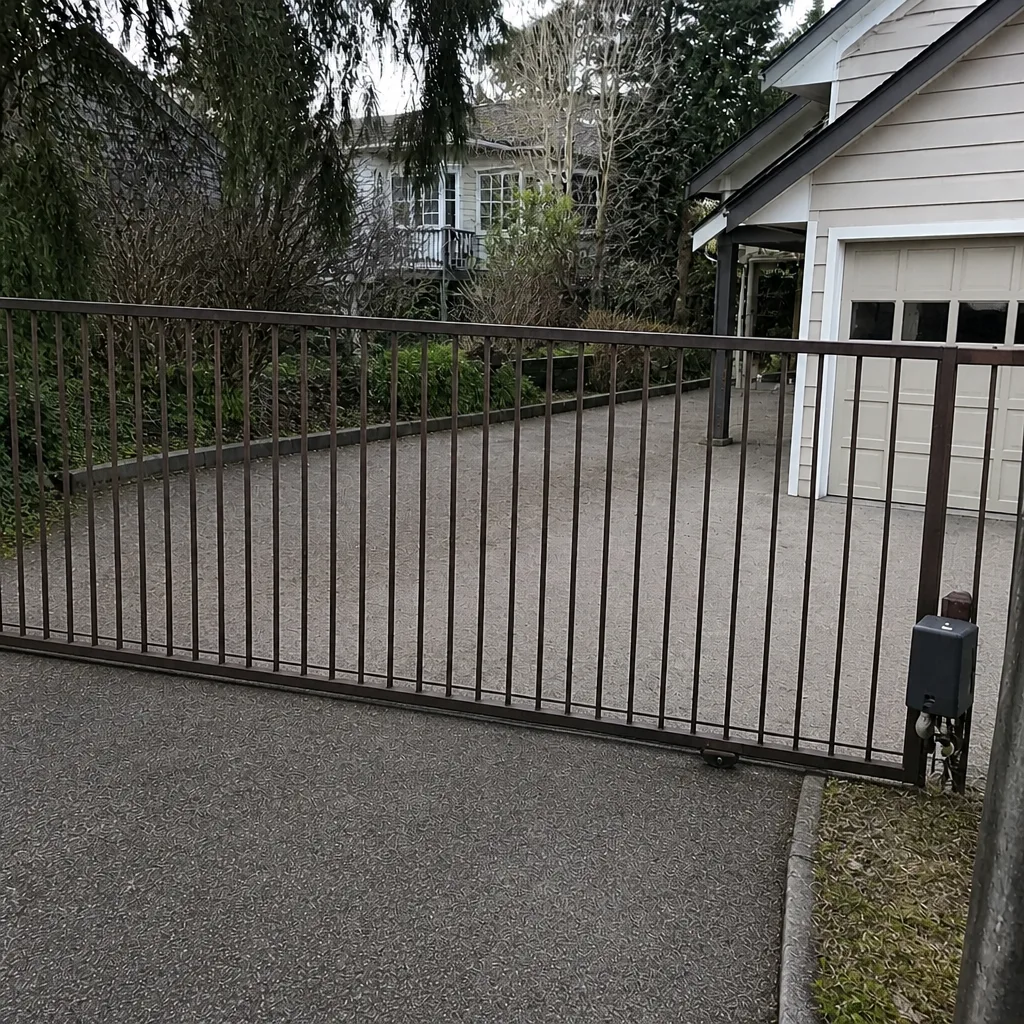
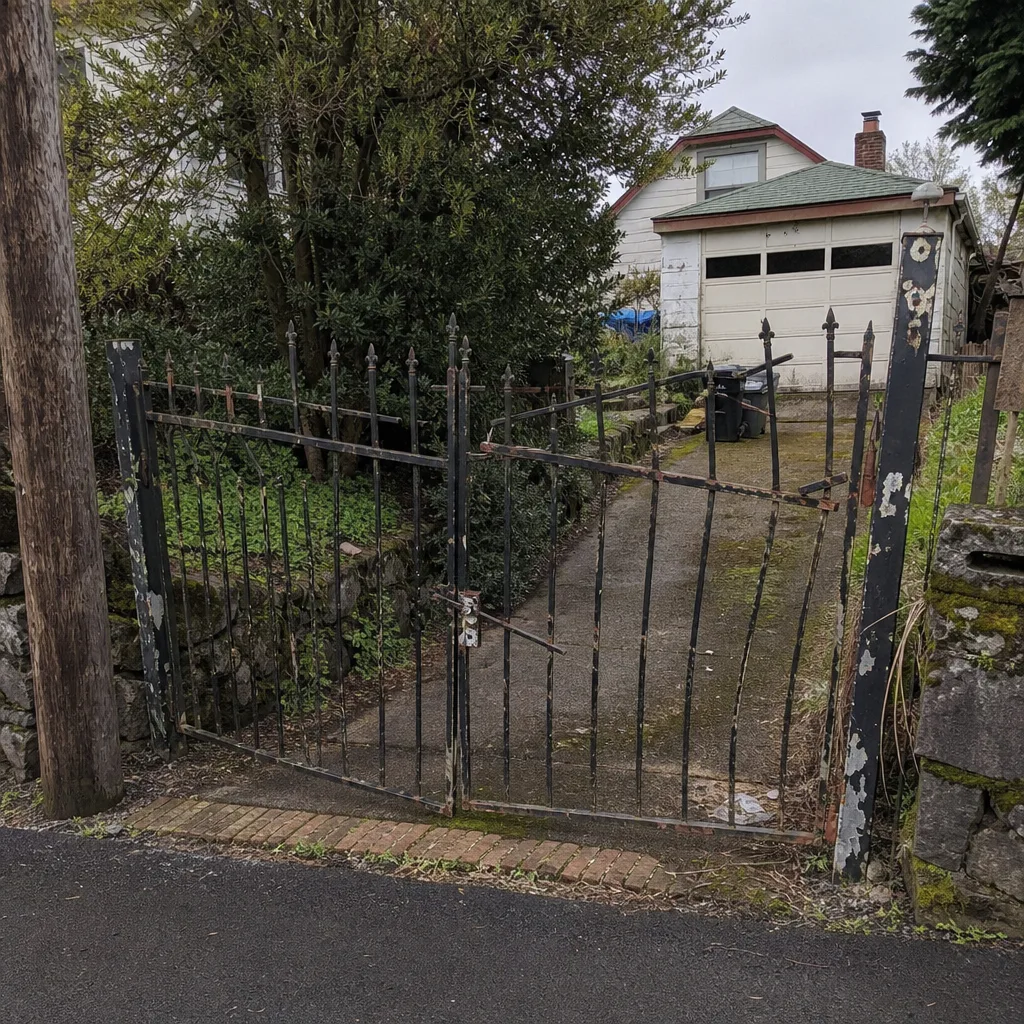
See the difference
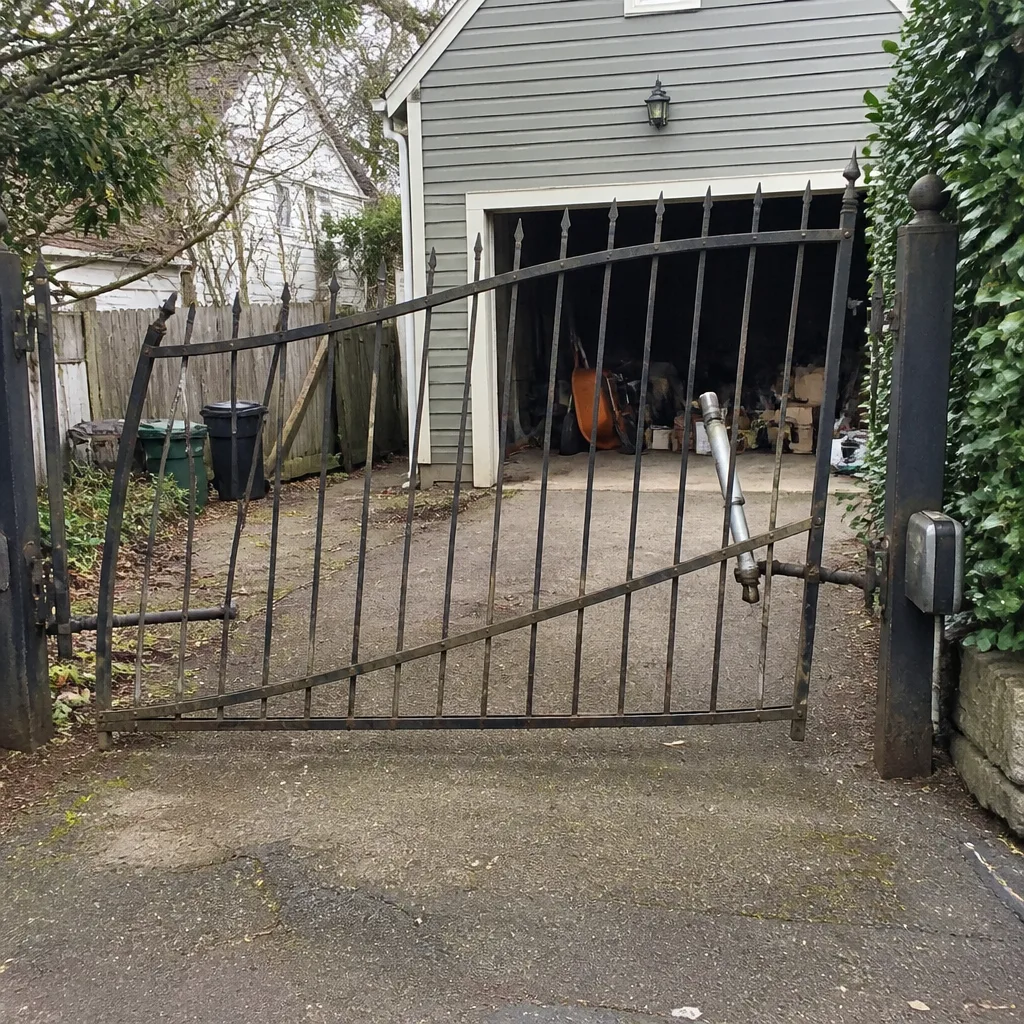 Before
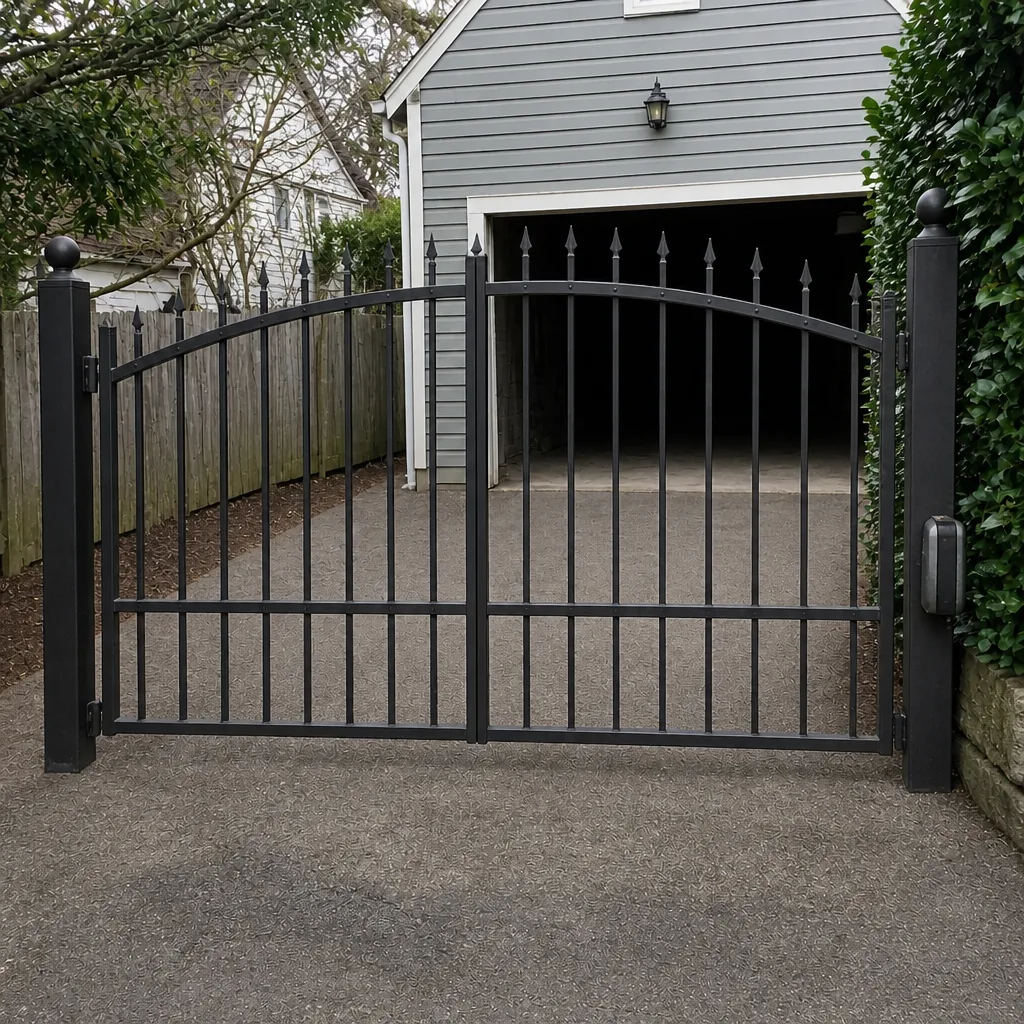 After
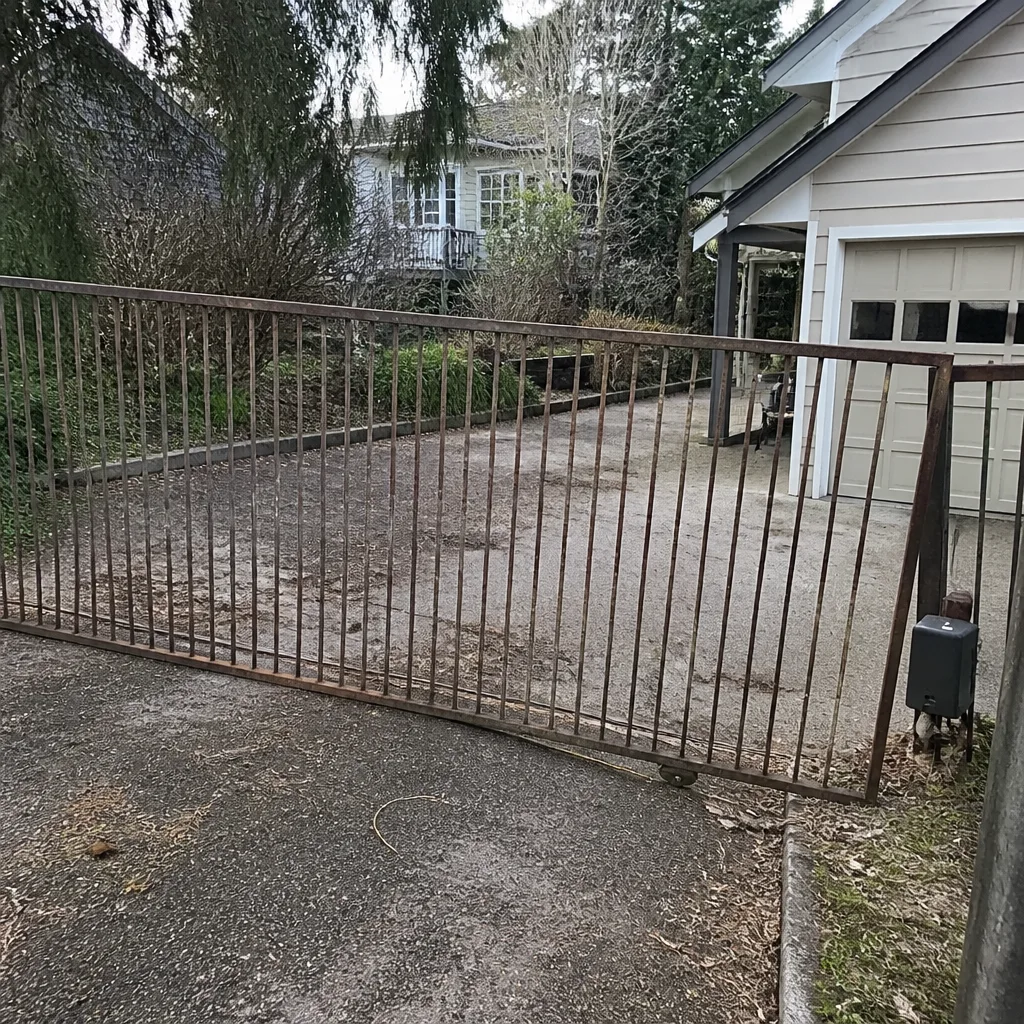 Before
 After
 Before
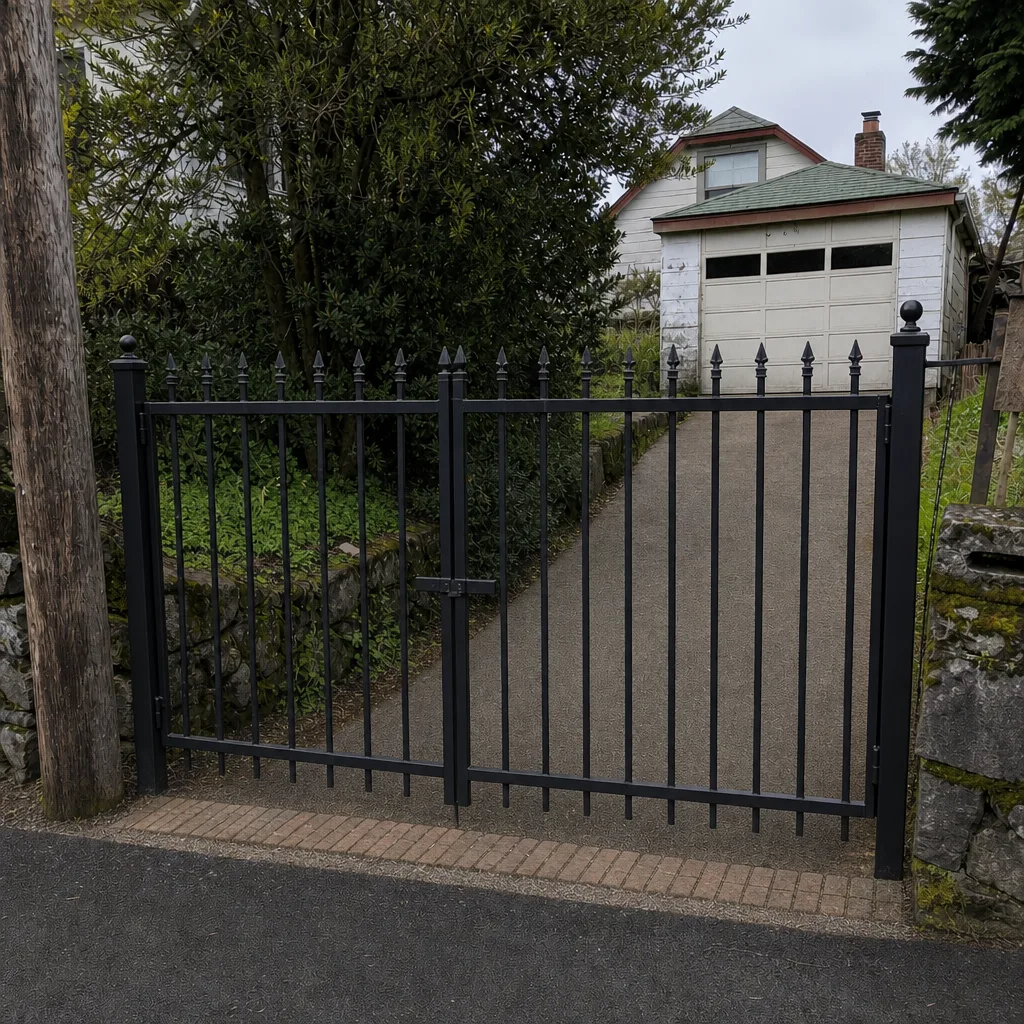 After
When to Call a Professional
Some gate work is fine to observe, and some should be handled by a trained technician. Call a professional if the gate’s post is leaning or the gate drags on the ground, if an operator reverses at random, won’t open, or stops partway, or if the access control layer – keypad, intercom, loop detector – has failed. For automated gates, the wiring and the safety devices are genuinely dangerous parts; do not attempt repairs on the power run or safety edges yourself. Heavy gate leaves that can crush and slide gates that come off the track also deserve a trained set of eyes. If your gate is behaving in a way you can’t explain, the fastest path to a straight answer is a diagnostic visit. The price is quoted and agreed before any work starts, the estimate is free, and we answer 24/7. Call (866) 947-9019 for a free estimate in Sellwood.
Frequently Asked Questions
Because the hinge usually isn’t the cause. In Sellwood’s clay soil, a sagging gate is almost always a post problem, and replacing the hinge reattaches the gate to a foundation that has already moved. The fix is to correct the post or its footing, then check the hardware. That’s why our technicians check post plumb first. Call (866) 947-9019 for an exact diagnosis – estimates are free.
Gate repair is priced per job by the written estimate, so the final price depends on what’s actually wrong – a post correction, a hardware repair, an operator fault, or an access-control issue. The estimate itself is free, and the price is always quoted and agreed before any work starts, so you never face an invoice above the quote. Call (866) 947-9019 for an exact quote.
Same-day service is available when a technician is free, and fast dispatch runs from 7am to 7pm. Our phones are answered 24/7, so a call outside dispatch hours is booked into the next opening, Sunday through Friday. Call (866) 947-9019 to get on the schedule.
Yes. Electric and automated gates are a large part of what we do, including motor and opener repair, electric conversion, and access control. We’re certified to service nine major gate automation brands, from Mighty Mule and Ghost Controls at the residential end to FAAC, BFT, and DoorKing on the commercial side. If your gate runs on one of those, the technician already knows the system. Call (866) 947-9019 for a free estimate.
Yes. For automated gates, we handle the power connections and the safety devices – the edges and loop detectors that stop a gate from closing on a person or a vehicle. This is not DIY territory, because the wiring and the closing force are the dangerous parts of a powered gate. A trained technician should do this work. Call (866) 947-9019 to talk through your system.
We’ll tell you. If a gate’s frame is rusted through, the operator has no viable repair path, or the original hardware is mismatched beyond saving, replacement is the honest answer. We don’t sell you a repair that won’t hold. When replacement is the right call, our gate installation service covers it, and the diagnosis tells you which is which. Call (866) 947-9019 for a free estimate.
The Bottom Line
Gate problems in Sellwood trace back to three things: post movement in clay soil, moisture-driven wear, and mismatched hardware from generalist installers. Fixing the symptom – a new hinge, a patch, a quick adjustment – is why so many gates get repaired repeatedly and still fail. The real answer starts with the right diagnosis: check the post first, separate mechanical from structural from electrical, and account for the brand and what was actually installed. That’s what a specialist does differently. If you’re not sure where your gate’s problem lives, a free estimate and a written price before any work begins is the way to find out. Call (866) 947-9019. We answer 24/7. Fast dispatch from 7am to 7pm, Sunday through Friday.
Written by the team at Gate Repair Sellwood.